

B2B Lead Leakage: Where Your Leads Disappear and How to Stop It
In B2B marketing, generating leads is only half the battle. The real challenge is keeping them engaged throughout the buyer’s journey and converting them into paying customers. But here’s the catch, many businesses unknowingly lose qualified prospects due to lead leakage. These lost opportunities often go unnoticed, causing significant revenue drains.
In this article, we’ll uncover what B2B lead leakage is, why it happens, and how you can stop it with the right systems, strategies, and tools.
What is B2B Lead Leakage?
B2B lead leakage refers to the loss of potential customers during the sales and marketing funnel due to inefficiencies, lack of follow-up, or poor alignment between teams. In simpler terms, it’s when leads enter your pipeline but never make it to conversion, often slipping away unnoticed.
For example, imagine a prospect downloads your whitepaper, but your sales team never follows up. Or, a qualified lead engages with your demo but doesn’t receive nurturing emails afterward. These gaps create leakage points that drain opportunities from your funnel.
Types of Lead Leakage
Lead leakage happens in different forms across the funnel. The main types include:
- Top-of-Funnel Leakage – Leads generated from campaigns are not captured properly or ignored due to poor tracking.
- Middle-of-Funnel Leakage – Qualified leads disengage because of lack of nurturing or inconsistent messaging.
- Bottom-of-Funnel Leakage – Sales-ready leads don’t convert due to weak follow-up or delayed responses.
- Post-Sales Leakage – Converted customers churn because of poor onboarding, weak customer success strategies, or lack of upsell efforts.
Recognizing the type of leak helps in applying the right fixes
Common Causes of Lead Leakage in B2B
Understanding where your leads disappear is the first step to plugging the leaks. Here are the top culprits:
Poor Lead Qualification
Not every lead is sales-ready. When marketing passes unqualified leads to sales, it wastes resources and creates friction. Without clear lead scoring, many valuable leads get ignored.
Lack of Timely Follow-Up
Research shows that 78% of buyers choose the vendor that responds first. If your sales team delays responses, hot leads quickly turn cold.
Disconnected Marketing and Sales Teams
When marketing and sales operate in silos, leads fall through the cracks. Misaligned goals, inconsistent messaging, and lack of communication create gaps in the funnel.
Ineffective Lead Nurturing
Leads need personalized nurturing across email, social media, and calls. Without consistent touchpoints, they disengage and turn to competitors.
Poor Data Management
Duplicate entries, missing information, or outdated CRM records make it hard to track and prioritize leads. Dirty data is one of the biggest sources of leakage.
Overlooking Post-Sales Engagement
Lead leakage doesn’t end after conversion. If existing customers aren’t engaged with proper onboarding and retention strategies, they churn—causing revenue leakage.
Signs That You Have Lead Leakage
Wondering if your organization is suffering from lead leakage? Look out for these red flags:
- High lead generation numbers but low conversion rates.
- Sales team complaints about low-quality leads.
- Delayed or no follow-up after inbound inquiries.
- Leads repeatedly asking the same questions (indicating lack of communication).
- CRM data inconsistencies or missing information.
- Drop-off between demo requests and closed deals.
If these sound familiar, your pipeline is leaking.
Steps to Reduce Lead Leakage
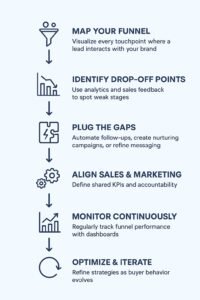
How to Stop B2B Lead Leakage
Stopping lead leakage requires a structured approach that strengthens both marketing and sales alignment while optimizing your funnel. Here’s how:
Improve Lead Qualification
- Implement lead scoring models based on behavior, demographics, and engagement.
- Use tools like HubSpot, Salesforce, or Zoho CRM to automate qualification.
- Ensure only high-quality leads are passed to sales
Strengthen Sales and Marketing Alignment
- Conduct regular meetings between teams to define lead criteria.
- Establish a clear Service Level Agreement (SLA) for lead handoffs.
- Share dashboards to track lead progress across both
teams.
Prioritize Timely Follow-Ups
- Implement automated email responses for inbound leads.
- Use sales engagement tools like Outreach or Sales loft for faster outreach.
- Train sales reps to follow up within minutes, not days.
Build a Strong Lead Nurturing Strategy
- Use email drip campaigns to educate and engage leads.
- Segment leads based on buyer stage and industry.
- Leverage retargeting ads to stay top of mind.
- Provide valuable content like webinars, case studies, and ROI calculators.
Clean and Maintain Your Data
- Regularly audit your CRM to remove duplicates.
- Enrich lead data using tools like Clearbit or ZoomInfo.
- Standardize data entry to ensure consistency
Focus on Post-Sales Engagement
- Offer customer onboarding programs.
- Create loyalty or upsell campaigns.
- Use surveys and feedback loops to improve retention.
How GodScale Helps Identify and Fix Lead Leakage
At GodScale, we specialize in auditing and rebuilding funnels to stop lead leakage at its source. Here’s how we help:
- Lead Flow Audit – We analyze every stage of your funnel to detect drop-off points.
- Data & CRM Clean-Up – We fix duplicate or outdated records to restore clarity.
- Sales & Marketing Alignment – We build frameworks for seamless handoff between teams.
- Personalized Nurturing Programs – We design workflows that keep prospects engaged.
- Performance Dashboards – We track and visualize lead health, so leaks are visible in real time.
By identifying where leads disappear, we rebuild funnels that are tighter, smarter, and revenue-focused.
Tips and Tricks to Reduce Lead Leakage
- Always follow up within minutes, not hours or days.
- Use progressive profiling to capture data over time without overwhelming prospects.
- Leverage retargeting ads to bring back cold leads.
- Create content for every funnel stage (blogs, case studies, whitepapers, demos).
- Audit your CRM every quarter to keep data clean.
Use AI-driven insights to predict and prevent drop-offs.
Technology’s Role in Stopping Lead Leakage
Modern B2B organizations rely on technology to plug leakage gaps effectively. Here are some must-have tools:
- CRM Platforms: Salesforce, HubSpot, or Pipedrive for lead tracking.
- Marketing Automation: Marketo, Pardot, or ActiveCampaign for nurturing.
- Data Enrichment Tools: ZoomInfo, Clearbit for better insights.
- Analytics & Reporting: Google Analytics, Tableau for funnel analysis.
Automation and AI-driven tools not only reduce manual errors but also help businesses maintain engagement across every stage of the buyer’s journey. At GodScale, we integrate these tools into one cohesive system, so no lead slips away.
Final Thoughts
B2B lead leakage is silent but deadly. Businesses invest heavily in lead generation, but without plugging funnel leaks, ROI suffers. By improving qualification, nurturing effectively, aligning teams, and leveraging the right tools, you can transform your pipeline into a consistent source of revenue.
Remember: generating leads is just the beginning. Keeping them engaged until conversion is where the real growth happens.
At GodScale, we don’t just help you generate leads, we ensure they stay engaged until conversion and beyond. Our funnel strategies are designed to capture, nurture, and convert leads while preventing leakage at every stage.